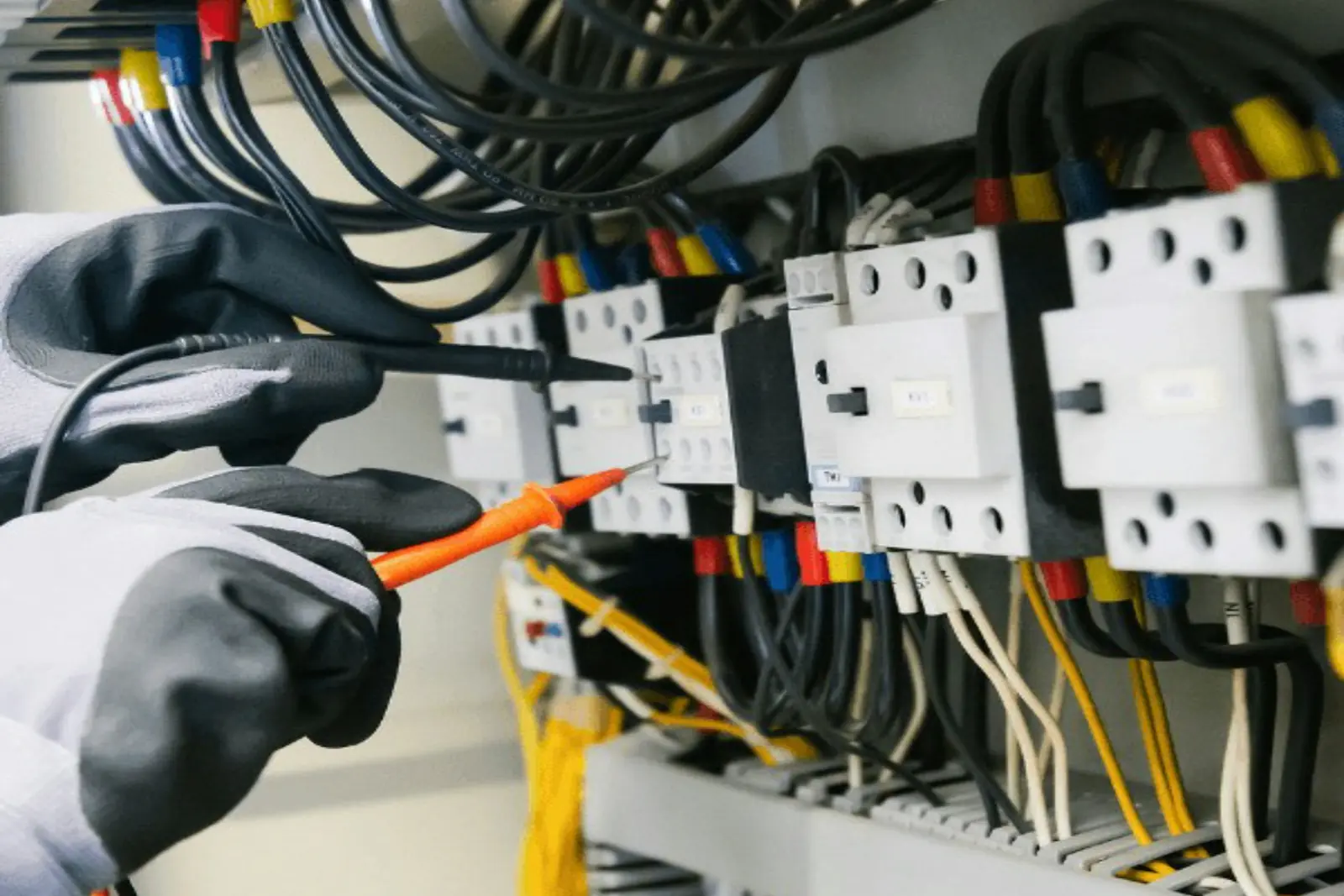
A variable frequency drive (VFD) – also called an AC drive, inverter or adjustable speed drive – controls an AC induction motor's speed by changing the frequency and voltage it supplies. Inside, it rectifies incoming AC to DC, stores it on a DC bus with large capacitors, and switches it back to a variable-frequency output with power transistors (usually IGBTs). Knowing that simple chain – input, DC bus, output – makes most faults and most replacement decisions easier to understand.
Key takeaways
- Size a drive by the motor's full-load current, the supply voltage and the duty – not by horsepower alone.
- Before you replace a failed drive, find out why it failed, or the new one may fail the same way.
- Back up the parameters of every critical drive now; it is the single biggest time-saver in a replacement.
- DC bus capacitors can hold a dangerous charge after power is removed. Wait, then verify with a meter.
Safety first: drives store energy in their DC bus capacitors after power is switched off. Only qualified personnel should work on drives, following lockout/tagout, waiting the discharge time marked on the drive and verifying zero voltage on the DC bus with a properly rated meter.
Sizing a VFD
Start with the motor nameplate
The motor's nameplate gives you the numbers that matter: rated voltage, full-load amps (FLA), horsepower or kW, base frequency and speed, and service factor. Horsepower is a useful shorthand, but two motors of the same horsepower can draw different currents, so the drive's continuous output current must cover the motor's full-load current. Our guide to reading a motor nameplate and sizing a replacement VFD walks through every field.
Match the supply
Drives are built for a voltage class (for example 240 V or 480 V) and for single-phase or three-phase input. Some three-phase drives can be fed from single-phase power, but usually only with a large derating – check the manufacturer's documentation before relying on it.
Normal duty or heavy duty
Many drives carry two ratings. Normal duty (sometimes called light or variable torque) suits fans and centrifugal pumps, where the load falls off with speed and short overloads are modest. Heavy duty (constant torque) suits conveyors, mixers, extruders, hoists and positive-displacement pumps, which need full torque at low speed and bigger overloads to start. The same drive has a lower current rating in heavy duty, so a hard-starting load may need the next size up.
Derate for the environment
Drives are rated at a maximum ambient temperature and altitude. Hotter enclosures, higher altitude and higher carrier (switching) frequencies all reduce the current a drive can deliver. The manual gives derating curves; use them for hot rooms, sealed panels and sites at altitude.
Consider the extras
- Braking for loads that must stop quickly or that overhaul the motor – a dynamic braking resistor or a regenerative unit.
- Line reactors or filters on the input to reduce harmonics and protect against supply disturbances.
- Output reactors or filters for long motor leads, which can cause voltage spikes at the motor terminals.
- Enclosure rating for dust, washdown or outdoor locations.
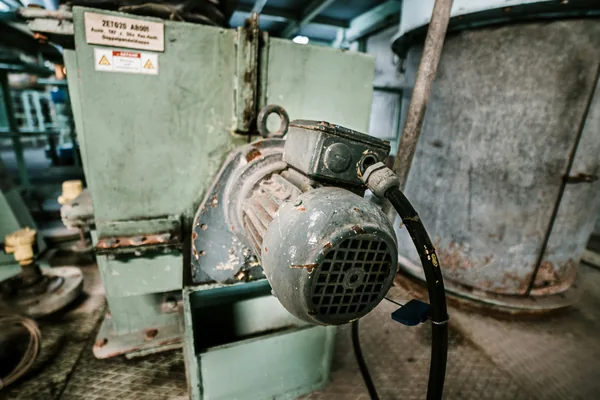
Replacing a failed drive
1. Find out why it failed
A drive that failed because of a shorted motor, a failed cooling fan, a blocked heat sink or a supply problem will take the replacement down too. Before installing a new drive, check:
- The motor and cable. Test insulation resistance with the motor leads disconnected from the drive – an insulation tester's voltage can damage drive electronics.
- Cooling. Fans turning, heat sink clean, enclosure filters clear, panel air conditioning working.
- The supply. Balanced phase voltages, tight connections, correct fuses or breaker.
- The fault log. Many drives keep a history of recent faults that points at the cause.
2. Choose the replacement
The best replacement is the same catalog number, which keeps mounting, wiring and parameters identical. If that is not available, a drive from the same family with the same voltage class and an equal or higher current rating is usually the next-best choice. A different family or brand can work, but plan for new mounting, different control wiring and a fresh parameter set. Match any option cards (communication, I/O, encoder feedback) as well. For a worked example, see replacing a PowerFlex 40 with a PowerFlex 525.
3. Restore the parameters
This is where preparation pays off. If you saved the parameters – with the manufacturer's software, a copy keypad or a written list – you can load them and be running quickly. If not, you will be reading the old drive's display (if it still powers up), the drawings and the motor nameplate. After loading, enter the motor data and run the drive's auto-tune if the application uses sensorless vector or flux vector control.
4. Commission and test
Check direction of rotation, acceleration and deceleration times, speed reference, start/stop and safety circuits, and any network communication before handing the machine back to production.
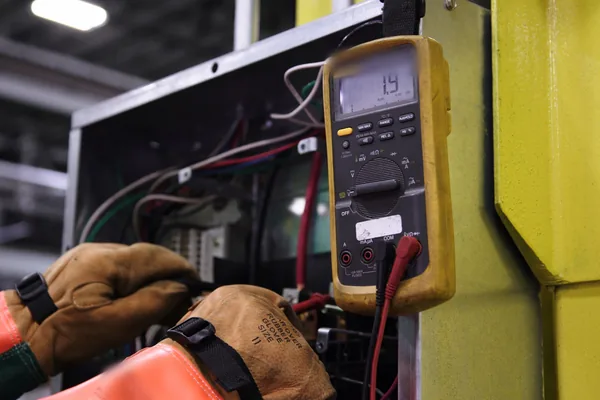
Common VFD faults and what they usually mean
| Fault | Usual suspects | Where to look |
|---|---|---|
| Overcurrent | Acceleration too fast, mechanical binding, shorted motor or cable, wrong motor data | Accel time, load, motor insulation, auto-tune |
| DC bus overvoltage | Decelerating a high-inertia load; supply voltage spikes | Decel time, bus regulation setting, braking resistor |
| Undervoltage | Supply sag, loose connection, blown input fuse, failing pre-charge | Input voltage and fuses, connections |
| Overtemperature | Failed fan, dirty heat sink, hot enclosure, overload | Fans, filters, ambient temperature, load |
| Motor overload | Motor genuinely overloaded, wrong FLA parameter, running slow for long periods | Load, motor parameters, motor cooling |
| Ground fault | Damaged motor insulation or cable, moisture in a junction box | Insulation test (motor disconnected from the drive) |
| Input phase loss | Blown fuse, open breaker pole, loose supply connection | Supply phases and protection |
| Communication loss | Network cable, switch, controller in program mode, wrong address | Network, controller status, drive comm settings |
Fault names and codes differ between manufacturers, so always confirm with the drive's manual. Repeated faults that clear on reset are a warning, not a nuisance: find the cause before the drive or motor is damaged.
Spare drives on the shelf
A spare drive is only useful if it works when you need it. Store drives in a clean, dry place within the manufacturer's storage temperature range, and follow the manufacturer's guidance for drives stored unpowered for long periods – electrolytic DC bus capacitors may need reforming before full voltage is applied. Label each spare with the machines it fits and keep its parameter file with it.
Need a drive today? Browse AC drives and VFDs, soft starters or drive and inverter boards, or search by part number. For a drive that has been discontinued, see how to source obsolete parts.
Frequently asked questions
Can I size a VFD by horsepower alone?
Use horsepower as a starting point, but size the drive by the motor's full-load current, the supply voltage and the duty (normal or heavy). The drive's continuous output current must cover the motor's full-load amps for the application.
Can a three-phase VFD run on single-phase power?
Some can, but usually only with significant derating. Check the manufacturer's documentation for single-phase input before relying on it.
Why does my drive trip on overvoltage when stopping?
Decelerating a high-inertia load sends energy back into the drive and raises the DC bus voltage. Common fixes are a longer deceleration time, enabling the drive's bus regulation, or adding a braking resistor sized for the application.
Is it safe to work on a drive right after switching it off?
No. The DC bus capacitors can hold a dangerous charge after power is removed. Lock out and tag out, wait the time given on the drive's label and verify zero voltage with a meter before touching anything.