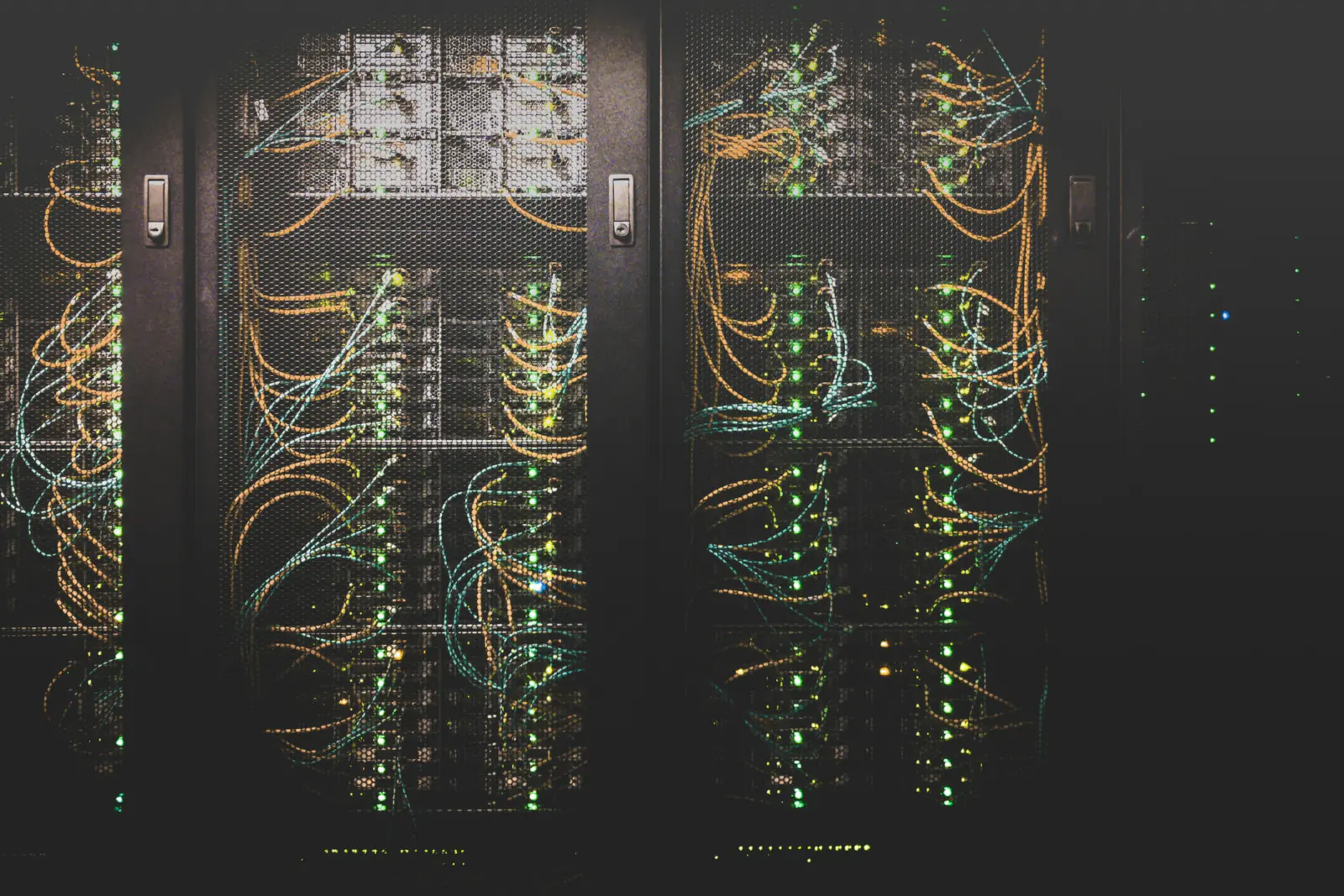
A data center's electrical design is built around redundancy – dual feeds, N+1 or 2N UPS, A and B power paths to every rack. When a part fails, the load usually stays up, but the site runs with less protection until the part is replaced. Knowing each stage of the chain tells you which spares shorten that window. For the wider spares list, including cooling controls and networking, see our data center spare parts list.
Key takeaways
- The chain runs utility → medium-voltage switchgear → transformer → low-voltage switchgear → UPS → PDU/RPP → rack PDU, with generators and transfer switches alongside.
- Most replaceable parts are breakers, trip units, relays, coils, fuses, surge protection, power supplies, fans and monitoring cards.
- On every replacement, match the ratings, frame or model, interrupting rating, voltage class and series or firmware – not just the amps.
- Critical spares are the parts that are installed many times, take long to replace and reduce redundancy when they fail.
- Check service agreements before stocking UPS, generator or switchgear parts.
Safety first: data center power equipment is often energized from more than one source – utility, generator, UPS and batteries. Work only by qualified personnel under your site's method of procedure and lockout/tagout rules, with PPE for the arc-flash hazard and absence of voltage verified on every source before work begins.
The power chain at a glance
- Utility service and medium-voltage (MV) switchgear – the incoming feed, protected by MV breakers and protective relays.
- Transformers – stepping medium voltage down to 480 V (or 415 V) for the building.
- Low-voltage switchgear and switchboards – main, tie and feeder breakers distributing power to UPS systems and mechanical loads.
- UPS systems – conditioning power and riding through outages on batteries until generators pick up the load.
- PDUs, remote power panels (RPPs) and busway – branch circuits in the white space.
- Rack PDUs, whips and cords – the last few feet to the servers.
Beside the chain sit generators and automatic transfer switches, and the cooling plant, which has its own distribution, drives and motor controls.
Utility service and medium-voltage switchgear
Typical parts: vacuum circuit breakers (often drawout), multifunction protective relays, current and voltage transformers, current-limiting fuses, surge arresters, trip and close coils, spring-charging motors, auxiliary switches, and the DC control power system – battery charger and batteries.
Check when replacing: the voltage class, continuous current, interrupting and short-circuit ratings, and BIL. A drawout breaker must be the type the cell was built for, so its interlocks and connections line up. Coils and motors must match the control voltage, such as 48 V DC, 125 V DC or 120 V AC. A replacement relay needs the same model – or an approved equivalent – and the settings file from your protection study.
Keep on the shelf: a relay of each model you run, with its settings saved; trip and close coils; a charging motor; MV fuses of each rating; and control power fuses.
Transformers
Typical parts: temperature monitors and cooling fans on dry-type units; gauges, pressure relief devices and fuses on liquid-filled pad-mounts; surge arresters on the primary side.
Check when replacing: kVA, primary and secondary voltages, winding connection (for example delta-wye), percent impedance – it largely sets the available fault current downstream – temperature rise, and a K-factor rating where the unit feeds non-linear IT loads.
Keep on the shelf: fans, a temperature controller and fuses. A whole spare transformer is a site-level decision, usually driven by lead time.
Low-voltage switchgear and switchboards
Typical parts: low-voltage power and insulated-case circuit breakers, electronic trip units and rating plugs, molded case breakers in feeder sections, shunt trips, undervoltage releases, auxiliary switches, spring-charging motors, meters, CTs, surge protective devices (SPDs) and control relays for main-tie-main schemes.
Check when replacing: the frame and sensor rating, the rating plug, and the trip unit's model and functions (long-time, short-time, instantaneous and ground fault). The interrupting rating must cover the available fault current at your voltage. Match fixed or drawout mounting, accessory coil voltages and lug ranges. Low-voltage power circuit breakers are listed to UL 1066; molded case and insulated-case breakers to UL 489. Our molded case breaker ratings guide walks through every field on the label.
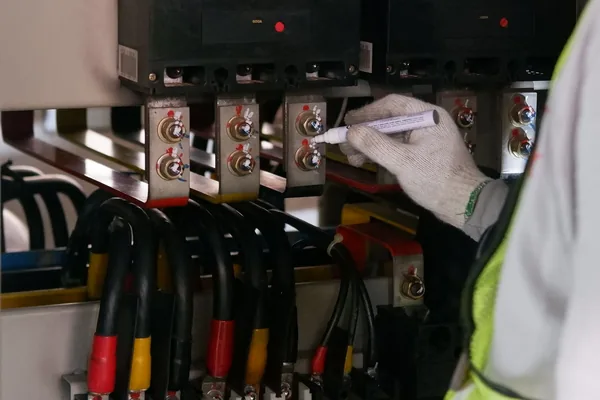
Keep on the shelf: a breaker of each frame and rating that is installed many times, trip units or rating plugs, shunt trips and auxiliary switches, and SPD replacement modules.
Generators and automatic transfer switches
Typical parts: transfer switch controllers, operator mechanisms, control relays and power supplies; generator controllers, voltage regulators, battery chargers, starting batteries and block heaters.
Check when replacing: the ATS amp rating, number of poles (3 or 4 where the neutral is switched), transition type (open, delayed or closed) and withstand and closing rating. For controllers and regulators, match the model and firmware and keep the settings.
Keep on the shelf: starting batteries on a rotation plan, a battery charger, relays and fuses – and controllers where the service agreement allows.
UPS systems
Typical parts: cooling fans, air filters, batteries, communication and monitoring cards, and on modular systems, power modules. DC and AC capacitors are wear items, usually replaced by the manufacturer's service provider.
Check when replacing: the exact UPS model and rating, and the series or firmware level that modules and cards must match. For batteries, the type, string voltage and number of blocks.
Keep on the shelf: fans, filters and a communication card. Check the service agreement before buying anything inside the cabinet.
PDUs, remote power panels and busway
Typical parts: branch and main breakers, PDU transformers, branch circuit monitoring CTs and boards, display and monitoring cards, SPDs, and on overhead busway, plug-in units (bus plugs) with their own breakers or fuses.
Check when replacing: a branch breaker must be a type listed for that panelboard, with the same poles, trip rating, voltage – for example 208Y/120 V or 415Y/240 V – and interrupting rating. A bus plug must match the busway maker and product line, the amp rating and the connection to the rack.
Keep on the shelf: branch breakers in the ratings used most, a few bus plugs of your standard configuration and monitoring boards.
Rack PDUs, whips and cords
Typical parts: basic, metered or switched rack PDUs, whips, locking plugs and receptacles such as NEMA L6-30 and L21-30, IEC 60309 pin-and-sleeve connectors, and C13/C14 and C19/C20 power cords.
Check when replacing: the input plug, voltage and amperage, the number and type of outlets, and the network card's firmware on managed units. C19/C20 connectors carry more current than C13/C14, so use the cord the equipment specifies.
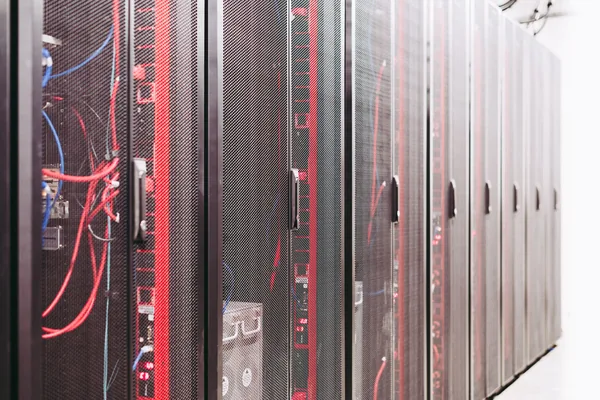
Keep on the shelf: a spare rack PDU of each standard model, cords and whips in the common lengths, and receptacles.
Cooling power
Chillers, pumps, cooling towers and air handlers run on VFDs, contactors, overload relays, control transformers and 24 V DC power supplies. Spare a drive of each common rating with its parameters saved (see VFD basics), plus EC fans, contactors and overloads.
Turning the chain into a spares list
Walk the chain with the single-line diagram and list every catalog number, series and firmware level. Rank each part by the impact of a failure, its lead time and how many identical units you run. Our nameplate and date code guide shows what to record from each label.
Send the list to us through the data center electrical quote page: a spares list or BOM gets an official written quote in under 24 hours on business days, and a single part is quoted within 1 hour during business hours (Mon–Fri 9–3:30 CT). We quote from our stock and our sourcing network of 5M+ parts. See also data center electrical parts and AI infrastructure.
Frequently asked questions
Which data center power parts are worth keeping as critical spares?
Parts that are installed many times, take long to replace and reduce redundancy when they fail: the breaker frames and trip units used most, protective relays, trip and close coils, fuses, surge protection modules, control power supplies, PDU branch breakers and – where the service agreement allows – UPS fans and filters.
Can I replace a switchgear breaker with a different model?
Only with a breaker that is listed or approved for that switchgear or switchboard, with the same frame, mounting (fixed or drawout), ratings and accessories, and a trip unit set to your coordination study. A different model needs the equipment maker's or a qualified engineer's approval.
Can we stock our own UPS parts?
Some of them. Fans, air filters, batteries and communication cards are common spares, but many parts inside a UPS are replaced only by the manufacturer's service provider under the service agreement. Check the agreement before you buy.
Can KIV Industrial Parts quote a list of power chain spares?
Yes. Send the list as a spreadsheet or PDF with part numbers, quantities and acceptable conditions, and you get an official written quote in under 24 hours on business days, from our stock and our sourcing network of 5M+ parts.