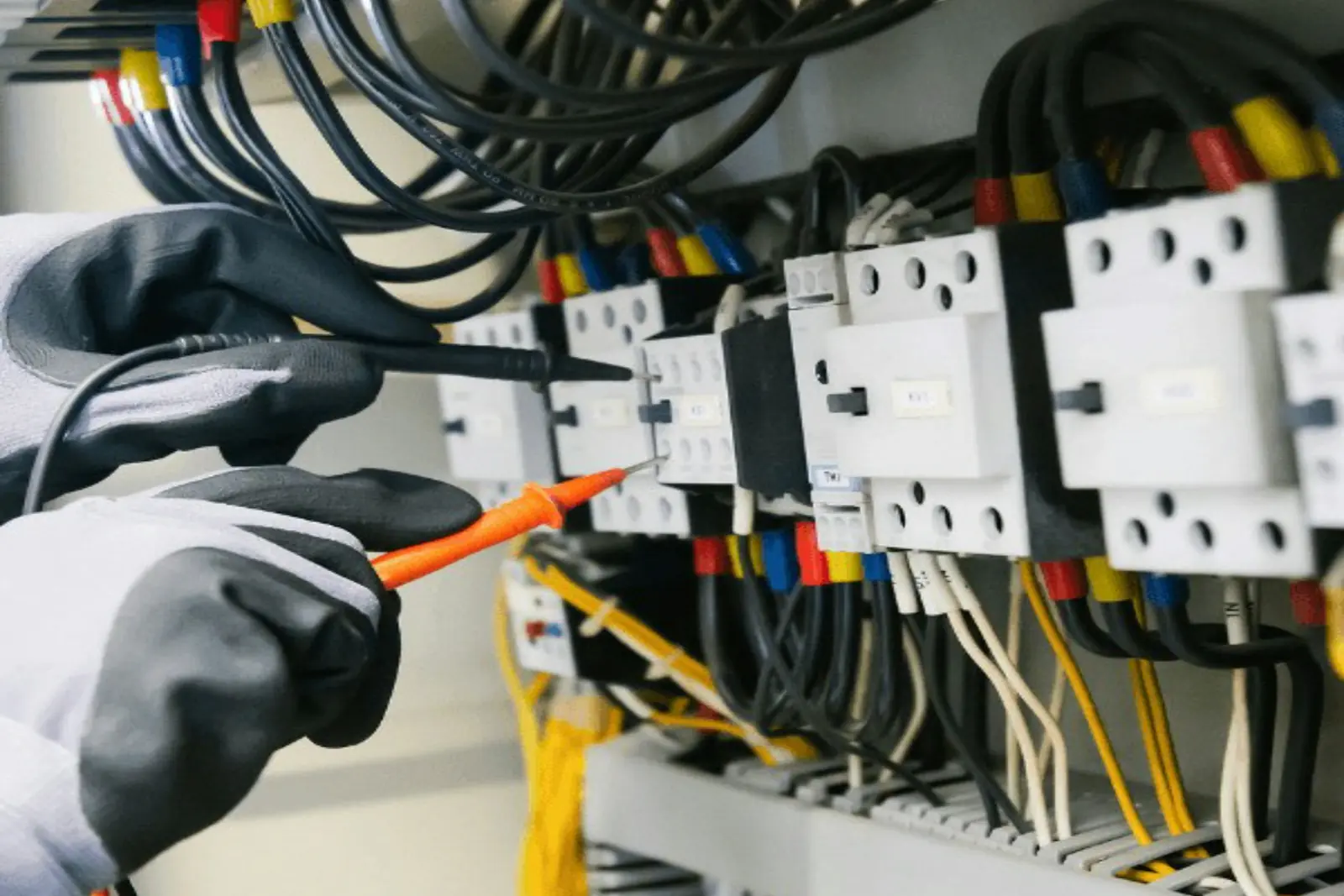
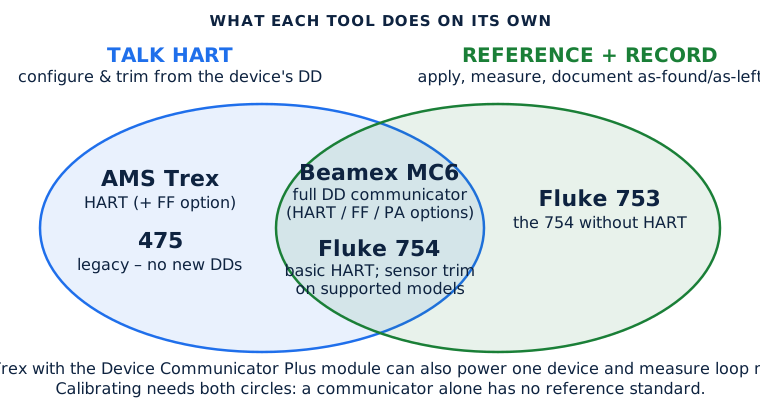
Calibrating a HART transmitter takes three abilities: talking HART to the device (read the PV, change the configuration, run a trim), applying and measuring a reference (pressure, a simulated RTD, milliamps) with known accuracy, and recording the as-found and as-left results. A HART communicator such as the AMS Trex is built for the first. A documenting process calibrator such as the Fluke 754 or Beamex MC6 is built for the second and third, and adds some or all of the first. Knowing where each stops is the key to choosing.
Key takeaways
- A HART communicator alone cannot calibrate a transmitter: you still need a reference standard for the input and an accurate mA measurement.
- The 475 Field Communicator is discontinued; Emerson's successor is the AMS Trex, now sold in an upgraded 'Trex 2' version.
- The Fluke 754 is a documenting calibrator with basic HART functions, not a full DD-based communicator; sensor trim works only on the transmitters it is programmed for.
- The Beamex MC6 combines a documenting calibrator with a DD-based HART, FOUNDATION Fieldbus and PROFIBUS PA communicator (each an option).
- In a hazardous area, only an intrinsically safe version will do: an IS-approved Trex or 475, or the Beamex MC6-Ex. The standard Fluke 754 and MC6 have no Ex approval.
Safety first: follow your site's lockout/tagout and permit procedures; put the control loop in manual or out of service before you change a device's configuration or drive its output, and check the output before returning the loop to automatic. Use only intrinsically safe, approved tools in hazardous areas, and follow your site's permit procedures – whatever a tool's brochure says about permits.
At a glance
| What it does on its own | AMS Trex / Trex 2 | 475 (legacy) | Fluke 754 | Beamex MC6 / MC6-Ex |
|---|---|---|---|---|
| Configure a device from its DD | Yes – HART; FOUNDATION Fieldbus with a license | Yes – HART and FOUNDATION Fieldbus | No – calibration-related HART functions only | Yes – HART, FF and PROFIBUS PA, each an option |
| Sensor trim / output (D/A) trim | Yes, through the device's DD | Yes, through the device's DD | Output trim on any HART transmitter; sensor trim only on "supported" models | Yes (not in the HART "Basic View") |
| Measure loop mA | Yes with the Device Communicator Plus module (reference-grade; Trex 2 offers a NIST-traceable option) | No | Yes, calibration-grade | Yes, calibration-grade |
| Source / simulate mA | Current control 3–22.5 mA (Plus module) | No | Yes | Yes |
| Measure pressure | No | No | Yes, with Fluke 700-series pressure modules | Yes, internal and external modules |
| Power the loop | One HART device (Plus module) | No – needs an external supply | Yes, 26 V through an internal 250 Ω resistor | Yes (MC6 24 V; MC6-Ex 19 V) |
| Automated as-found / as-left records | Not as a calibration record (it logs configuration changes) | No | Yes, plus DPCTrack2 software | Yes, plus Beamex CMX / LOGiCAL |
| Hazardous-area version | Yes (intrinsically safe order option) | Yes (intrinsically safe order option) | No | Yes – MC6-Ex |
Capabilities depend on the model, modules, licenses and firmware; check the current data sheet for the unit you have or plan to buy.
Emerson AMS Trex (and Trex 2)
The AMS Trex Device Communicator is Emerson's current handheld for HART and FOUNDATION Fieldbus devices. It uses electronic device descriptions (EDDL) to talk to devices from any manufacturer, and Emerson's data sheet says it ships with a library covering more than 2,000 devices. HART is standard; FOUNDATION Fieldbus is a licensed option. Emerson's documents we found do not list PROFIBUS PA.
What a Trex can do beyond configuration depends on its communication module. The basic Device Communicator module has HART and fieldbus terminals and needs an externally powered loop. The Device Communicator Plus module can switch in its own loop resistor, power a single HART device on the bench, control and measure loop current, and power one fieldbus device.
In October 2025 Emerson announced an upgraded version, sold as AMS Trex 2, adding Bluetooth and an option for NIST-traceable current measurement accurate enough for calibration work. Emerson describes the earlier Trex's current measurement as intended for reference rather than calibration. Trex 2 modules are not interchangeable with the original Trex.
Driver updates: new device descriptions, apps and system software are installed from a PC with Emerson's Upgrade Studio; an active support contract includes automated DD updates.
Calibration records: the Trex can log configuration changes to AMS Device Manager, which is an audit trail, not a calibration certificate. For as-found/as-left records in AMS Device Manager, Emerson's Calibration Assistant works with documenting calibrators.
Emerson 475 Field Communicator (legacy)
The 475 was the standard HART and FOUNDATION Fieldbus handheld for years, and many are still in service. Emerson's March 2020 data sheet marks it discontinued, with support through October 2020, and points users to the AMS Trex. Emerson ran a trade-in offer for the move to Trex that expired in September 2020.
The 475 supports HART 5, 6 and 7 (including WirelessHART) and FOUNDATION Fieldbus through device descriptions, and it could be ordered in an intrinsically safe version. It does not power the loop or measure loop current: it needs an external supply and at least 250 Ω of loop resistance, with an optional series resistor if there is less. Device descriptions and system software were moved between a PC and the 475 with the Easy Upgrade Utility.
What that means in practice: a working 475 still talks to the devices it has descriptions for, but it will not get descriptions for new device revisions, and it has no manufacturer support. A transmitter with a newer device revision than the 475's library may only be reachable in generic mode, without its device-specific menus.
Fluke 754 (and 753)
The Fluke 754 is a documenting process calibrator that adds HART communication to the Fluke 753. Fluke says plainly that the 754 supports calibration-related HART functions only and points to a separate HART communicator for full commissioning. The 753 is the same calibrator without HART.
- Supported vs generic transmitters. The 754 is programmed with device-specific commands for a set of "supported" transmitters (the list is shown on the unit). Any other HART transmitter is "generic". Output trim, loop tests, pressure zero trim and basic read/write work on generic transmitters; sensor trim works only on supported ones. It does not use DD files.
- Loop power and resistor. Its loop supply (26 V DC) feeds the loop through an internal 250 Ω resistor, so no external supply or resistor is needed for a two-wire transmitter. With an external supply, add 230–270 Ω in series. While it powers the loop, the mA jacks only measure.
- Pressure. It reads Fluke 700-series pressure modules.
- Documenting. It runs as-found/as-left procedures automatically, stores the results, and uploads them to Fluke's DPCTrack2 software.
- Hazardous areas. The standard 754 has no Ex approval; Fluke's manual says not to use it around explosive gases or vapors.
Beamex MC6 (and MC6-Ex)
The Beamex MC6 is a documenting calibrator with a built-in full field communicator: HART, FOUNDATION Fieldbus and PROFIBUS PA are each a separately purchased option, and all three can be installed together. It works in five modes – meter, calibrator, documenting calibrator, data logger and communicator – and connects to Beamex's CMX and LOGiCAL calibration software. Beamex also documents a partnership with Emerson's AMS Device Manager.
- Device descriptions. It is DD-based, with device-specific, generic and a HART "Basic View" mode (which cannot trim). DDs are installed from Beamex's website with its DD Installer – you cannot load a manufacturer's DD file directly.
- Loop supply. Built-in 24 V with selectable impedance for HART or fieldbus, so no external supply or resistor is needed. It powers one instrument.
- Pressure. Up to three internal pressure modules plus a barometric module, and a port for external modules.
- MC6-Ex. The intrinsically safe version (Ex ia IIC T4 Ga; ATEX, IECEx and North American certificates) with all three protocols, a 19 V loop supply and up to two internal pressure modules. The standard MC6 has no Ex approval.
Which one do you need?
| If you mainly… | A good fit |
|---|---|
| Commission, configure and troubleshoot many brands of HART and FF devices | AMS Trex (with fieldbus license if you have FF); IS version for hazardous areas |
| Calibrate HART transmitters and need records for audits | A documenting calibrator – Fluke 754 or Beamex MC6 – often alongside a communicator |
| Want one instrument for calibration, full configuration and fieldbus | Beamex MC6 with the protocol options you need |
| Calibrate inside hazardous areas | Beamex MC6-Ex, or an IS communicator plus an IS-rated reference |
| Still use a 475 | Plan a replacement: no support or new device descriptions since 2020 |
A communicator plus a separate pressure or temperature calibrator is a perfectly valid kit: the communicator performs the trims while the calibrator supplies the reference. What matters is that the reference is accurate enough (a 4:1 accuracy ratio to your tolerance is the usual target) and that the results are recorded. For worked procedures, see calibrating a Rosemount 3051 and calibrating an Endress+Hauser TMT82, and our HART loop basics.
Device descriptions (DDs): why they matter
A HART device description tells a host which parameters, menus and methods (such as trims) a particular device and device revision offers. DDs are written in EDDL (IEC 61804) and registered in the FieldComm Group's DD library. When a transmitter's device revision is newer than the DD on your handheld, the handheld may only offer generic HART functions, and the device-specific trims and diagnostics disappear. That is why keeping a communicator's DD library current – through Upgrade Studio for the Trex, the DD Installer for the MC6 – matters, and why an unsupported 475 becomes less useful every year.
Always follow the manufacturer's manual and your site's procedures. Features, licenses and dates change; this comparison reflects the manufacturers' documents listed below as of the date at the top of this page.
Sources
- Emerson, AMS Trex Device Communicator product data sheet
- Emerson, AMS Trex 2 User Guide
- Emerson, news release on the upgraded AMS Trex (October 2025)
- Emerson, Calibration Assistant SNAP-ON data sheet
- Emerson, 475 Field Communicator data sheet (discontinued, March 2020)
- Emerson, "475 has retired" flyer (2020)
- Fluke, 754 Documenting Process Calibrator-HART product page
- Fluke, 754 HART Mode Users Guide
- Fluke, 754 technical data sheet
- Beamex, MC6 brochure
- Beamex, MC6 User Manual
- Beamex, MC6-Ex brochure
- Beamex, MC6 with Emerson AMS Device Manager
- FieldComm Group (HCF), HART Application Guide
Shopping for a communicator, calibrator or transmitter? See our Emerson, Rosemount and Fluke stock, browse test equipment and transmitters, or request a quote for a specific model.
Frequently asked questions
Can a HART communicator calibrate a transmitter by itself?
No. A communicator can read the transmitter and run its trims, but calibration also needs a reference standard for the input and an accurate mA measurement for the output. A documenting calibrator provides those, or you use a separate calibrator alongside the communicator.
Is the Emerson 475 Field Communicator discontinued?
Yes. Emerson's March 2020 data sheet marks the 475 discontinued with support through October 2020 and points users to the AMS Trex Device Communicator.
Is the Fluke 754 a full HART communicator?
No. Fluke describes the 754 as a calibrator that supports calibration-related HART functions. It does not use device descriptions, and it performs a full sensor trim only on the transmitter models it is programmed for.
Which HART tools can be used in a hazardous area?
Only intrinsically safe versions: the IS-approved AMS Trex or 475, or the Beamex MC6-Ex. The standard Fluke 754 and Beamex MC6 have no Ex approval. Your site's permit procedures still apply.
Does the AMS Trex support PROFIBUS PA?
Emerson's Trex documents list HART and FOUNDATION Fieldbus (fieldbus with a license); we found no mention of PROFIBUS PA. The Beamex MC6 offers HART, FOUNDATION Fieldbus and PROFIBUS PA as options.